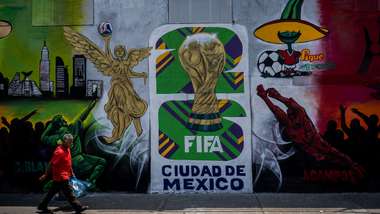
As reported by NewsSphere, the narrative of football is poised to add another illustrious chapter in 2026, with the global tournament returning to North America. This edition will be co-hosted by three nations: Canada, the United States, and Mexico. Among this trio, one nation stands apart, having previously welcomed the world’s premier football competition on two occasions and now preparing to etch its name in history as the sole country to host the FIFA World Cup three times.
From Pelé‘s triumph in 1970 to Diego Maradona‘s magic in 1986, and now to the anticipated celebration in 2026, this is the story of a nation that doesn’t merely play football but lives it—a land of goals, history, and unending passion.

A Legacy Forged in Stadiums of Legend
When the ball first rolled in the 1970 World Cup, Mexico opened not only its stadiums but its very soul. That tournament marked the first World Cup held in Latin America outside of Brazil, introducing the world to immortal names like Pelé, Franz Beckenbauer, Jairzinho, and Tostão. It was there, under the warm June air, that the world discovered the Estadio Azteca, a cathedral of concrete and echoes. In that hallowed venue, one of the greatest teams in football history, Brazil led by Pelé, secured its third World Cup title, cementing the Azteca’s status as sacred ground.
Sixteen years later, destiny chose Mexico once more. The nation, still bearing the scars from the devastating earthquakes of 1985, nevertheless brimmed with hope. The 1986 World Cup transcended sport, becoming a profound narrative of resilience. While the global conversation centered on Diego Maradona’s genius—his mesmerizing dribbles past English defenders and his infamous “Hand of God”—the Mexican people spoke of hope. The tournament extended beyond the green rectangle of the pitch into the streets and hearts of a populace yearning to believe that joy could return.
The Unprecedented Third Act
The announcement by the Fédération Internationale de Football Association (FIFA) that Mexico would co-host the 2026 World Cup was far more than a logistical decision. It represented a recognition of a unique passion, culture, and a people who live football as if it were a religion. For the third time, the world’s gaze will turn toward the land of chili peppers, mariachi, and goals celebrated with unparalleled fervor. Mexico is set to become the only nation in history to host the World Cup on three separate occasions—an achievement of monumental significance.
This upcoming edition will be distinct in scale, featuring an expanded format of 48 national teams, divided into 16 groups, contesting a total of 104 matches. Yet, for Mexicans, every match played on their soil will constitute an emotional pilgrimage. The action will unfold across three iconic stages: the colossal Estadio Azteca in Mexico City, the BBVA Stadium in Monterrey, and the Akron Stadium in Guadalajara—three theaters where hearts will beat as one.

Each Mexican host city promises to offer not just stadiums but a completely distinct way of experiencing the beautiful game. In Mexico City, football touches the realm of myth, its pulse syncing with that of a metropolis in perpetual motion. From the tamale vendors rising at dawn to the car horns composing the city’s rhythm, everything in the capital seems to beat to the tempo of a ball. Here, matches are not merely sporting contests but events woven into the urban fabric.

Monterrey and Guadalajara will contribute their own unique chapters. Monterrey, an industrial powerhouse, will showcase modern, state-of-the-art facilities, while Guadalajara, a city steeped in tradition and known as the birthplace of mariachi, will infuse the tournament with its rich cultural heritage. Together, these cities embody the diverse soul of a nation united by its footballing faith.